

Westmeath is home to some fantastic walks. I have written previously about the spectacular Mullaghmeen Forest, the Seven Wonders of Fore and the Westmeath section of The Royal Canal Way. In this article, I am going to delve into one of the most popular attractions in the town of Mullingar – Belvedere House and Gardens. The Belvedere House walk can be tailored to suit all levels of fitness. While there exists 6 short marked trails within the grounds, I like to mix and match between them to get the most out of my visit.
What is Belvedere House?
Belvedere House and Gardens sit on the shore of Lough Enell. The imposing Georgian House dates back to 1740 and packs in a lot of history. Now open to the public, the aim is to bring that history to life to the many people (160,000 per year) that visit the 160 acres of parkland.
Getting to the Belvedere House Walk
Belvedere House is located 6km south of Mullingar on the N52 roadway. The easiest option is to drive with plenty of parking available on site.
Limited public transport options are available also. Route 819 on the Transport For Ireland local link bus operates a couple of scheduled trips between Belvedere and Mullingar. Mullingar then has good rail and bus links for further onward travel.
The other option would be to get a taxi from Mullingar which would cost around €15 each way.
Opening Hours and entrance fee
The Belvedere House walk is accessible year round with seasonal changes to opening times – check out belvedere-house.ie for the most up to date opening time information.
We arrived just after lunch time on a sunny Thursday afternoon. While we saw plenty of small groups of people throughout the day, the Belvedere House walk never felt busy or overcrowded.
Our group consisted of myself, my Mam and my little boy Joe. While I’m fairly confident Belvedere is great fun for Children, I cannot confirm that based on our visit. The reason being that Joe fell asleep in his buggy pretty much as soon as we arrived and didn’t stir too much for the entirety of our Belvedere House Walk.
Joe had been very excited about visiting his grandparents in Westmeath so it was probably good that he had a well deserved rest. Plus it gave myself and my Mam a great opportunity to catch up. It cost €8 for an adult ticket, €6 for Seniors and then free for children under 3.
Belvedere House Walk Details
- Distance: The Belvedere Walk consists of 10km of paths spread out over 160 acres. We took the perimeter trails and then weaved in and out of other areas of the parkland if a particular attraction piqued our interest. We walked just over 6km in total at a very leisurely pace.
- Time Required: We spent nearly 2 hours which gave us a real sense of the place. We could easily have spent more time there though.
- Elevation Gain: Mostly flat. The outer loop has 112m of elevation gain over its 3km.
- Difficulty Level: Easy – the majority of time is spent walking on flat areas beside the lakeshore. You can tweak your route to match whatever your level of fitness.
- Starting Point: Car park at Belvedere House.
History of Belvedere House
Robert Rochfort constructed Belvedere House in 1740. Initially, the house was built as a hunting lodge.
As you will learn during your Belvedere House walk, Robert Rochfort was a nasty individual. Rochfort’s first wife died shortly after they wed. In 1736, he remarried a girl called Mary Molesworth despite her being just 16 years of age – Rochfort being 28 at the time. Within 7 years of their wedding day, the marriage between Rochfort and Mary fell apart due to rumours of an affair between Mary and Robert’s brother Arthur.
While the accusations are believed to be unfounded, Rochfort locked Mary up in their family home in nearby Gaulstown House and relocated himself to Belvedere.
Gaulstown would later in history be destroyed by the IRA in 1920 during the War of Independence.
The Jealous Wall
After parking the car, the first thing we noticed on the way to the entrance was the imposing Jealous Wall. The Jealous Wall is located just behind the entrance and visitor centre and takes a bit of explaining.

We got to see a few follies along the Belvedere House walk. A Folly being a costly ornamental building from the past with no real practical purpose. You can find them across Ireland and in a lot of cases the reason for them being commissioned by wealthy landowners to show off how rich they were. In some cases, particularly during the Famine, Follies were a means to provide work to local people living in desperate poverty.
While the Jealous Wall is classified as a folly, it did actually serve a purpose! Well, kind of…
In keeping with Robert Rochfort’s personality, he fell out with his other brother George. The falling out may have been driven by Robert being upset due to the fact that George’s residence (Tudenham Park House) being both bigger and better than Belvedere House.
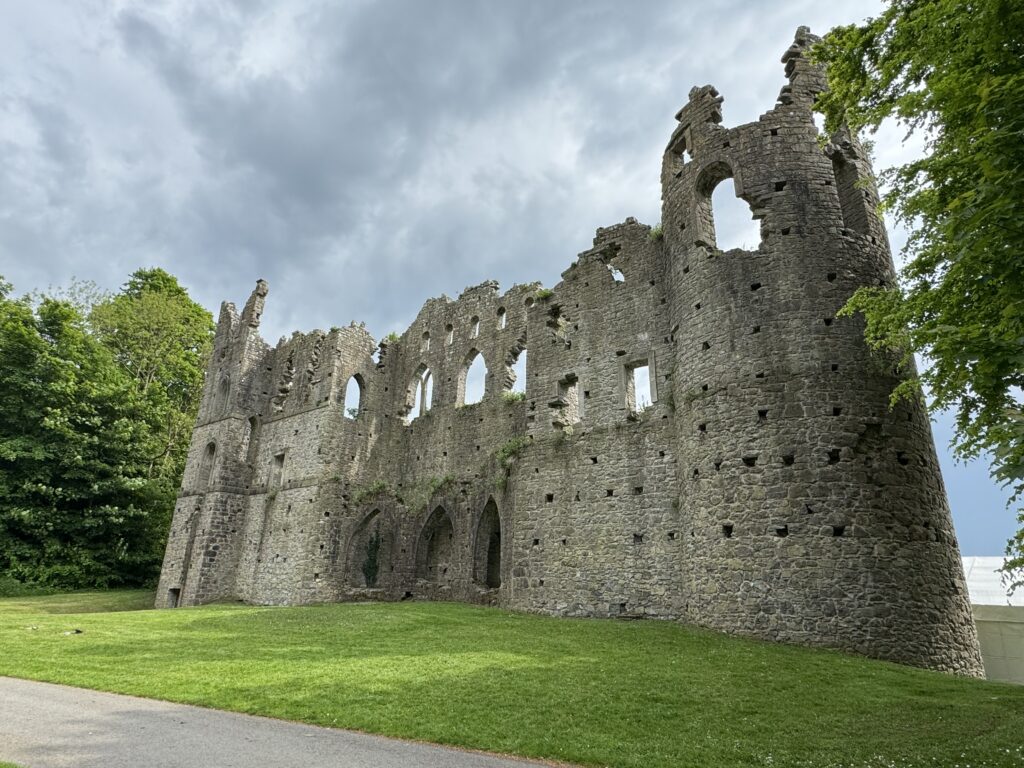
Robert instructed the building of the wall to obliterate any potential view of Tudenham from Belvedere House.
Zipline
The Belvedere House Walk boasts lots of attraction to keep children entertained. Chief among these are a children’s play area beside the visitor centre and a zipline on the way to the lake after leaving the Visitor Centre.
Lakeshore Walk
Myself and my Mother decided against taking a go on the zipline and instead followed the path down to the shore of Lough Ennell.
Known in Irish as Loch Ainninn after the Irish mythological figure Ainninn (also referred to as Annind). The lake came into being when waters flowed up during the digging of Anninn’s grave.
The lake is dotted with islands, many of whom have been identified as crannógs. The most famous island being Cró Inis (also known as Cormorant Island or Malachy’s island) which in ancient times was inhabited by Irish Royalty.
For us, the lake provided a picturesque background for a nice walk. The largest clearing on the lakeshore is in front of the main house. Thereafter, the path is through woodland with only glimpses of the water.
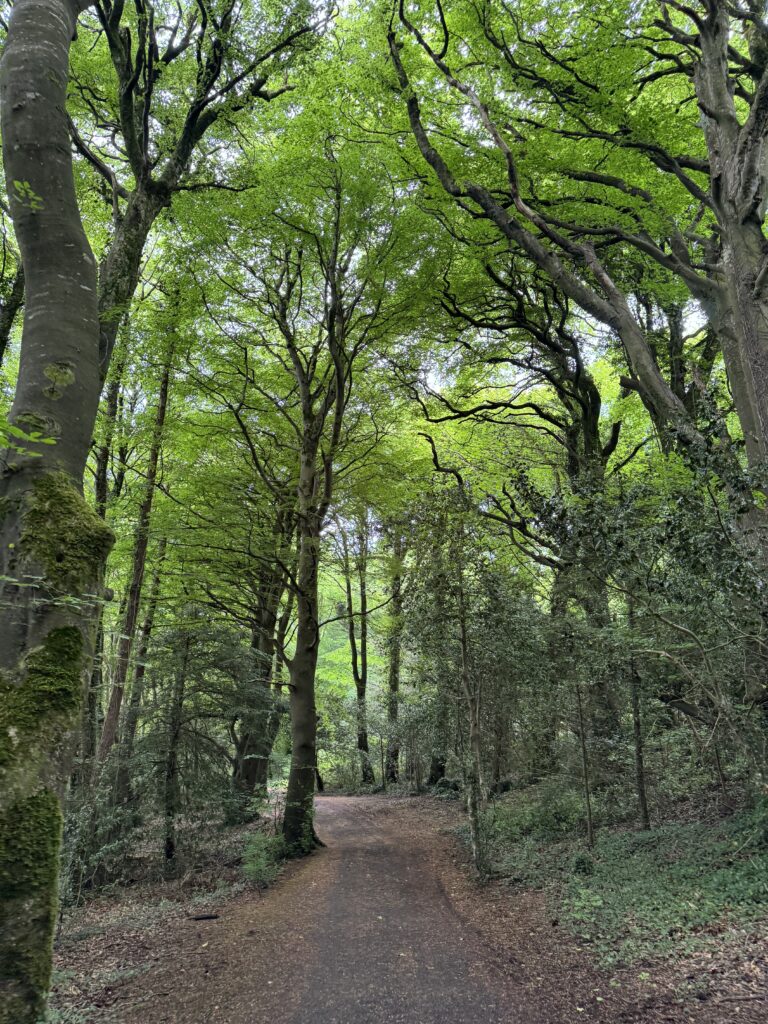
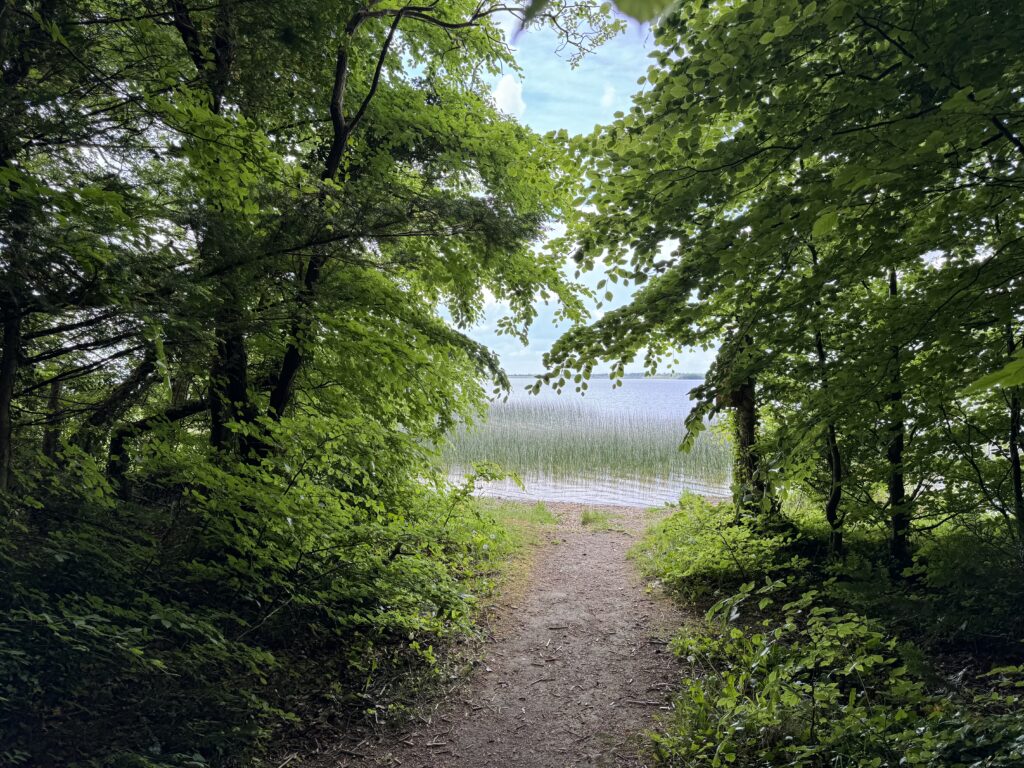
Luckily, small paths to little viewing areas are regular occurrences along the route. Many of the viewing areas hold little surprises such as swings or picnic tables. We were even lucky enough to get lovely views of a pair of swans out on the lake.

Gothic Arch
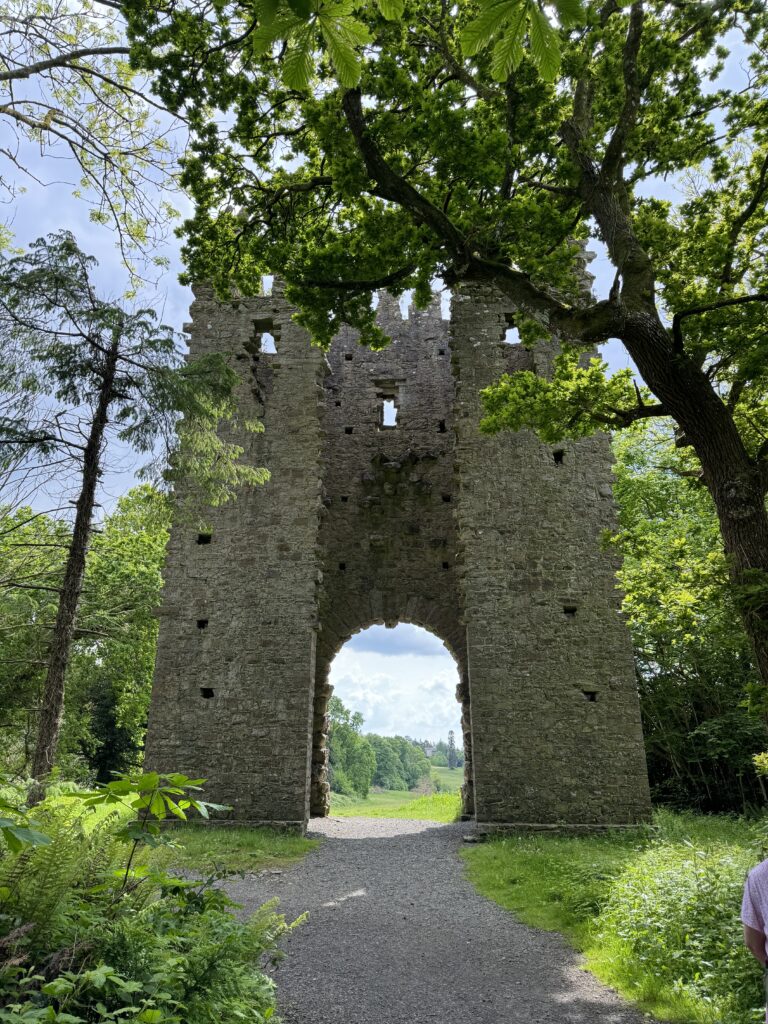
The next folly we encountered after the path turned away from the lakeshore. A Gothic Arch lies off the main path. We followed the signposts to investigate more.
I found it somewhat surprising to see the large stonework appear out of the woods. The speckled light through the trees and the shadows cast by the Arch made for a lovely view.
Also referred to as The Mysterious Face (for obvious reasons), this folly aims to lend an air of mystery to the estate. Belvedere House can be seen in the distance from the Arch.

The Ice house
We returned to the perimeter path via the Ice House. The Ice House along the Belvedere House Walk testifies to the luxurious past of the estate. Ice Houses being a sign of extreme wealth in Georgian and Victorian times. Nowadays, there isn’t really much to see apart from a green gate leading to an underground cellar. Nonetheless, it makes you think about the effort needed before modern conveniences arrived to store ice on a year round basis.
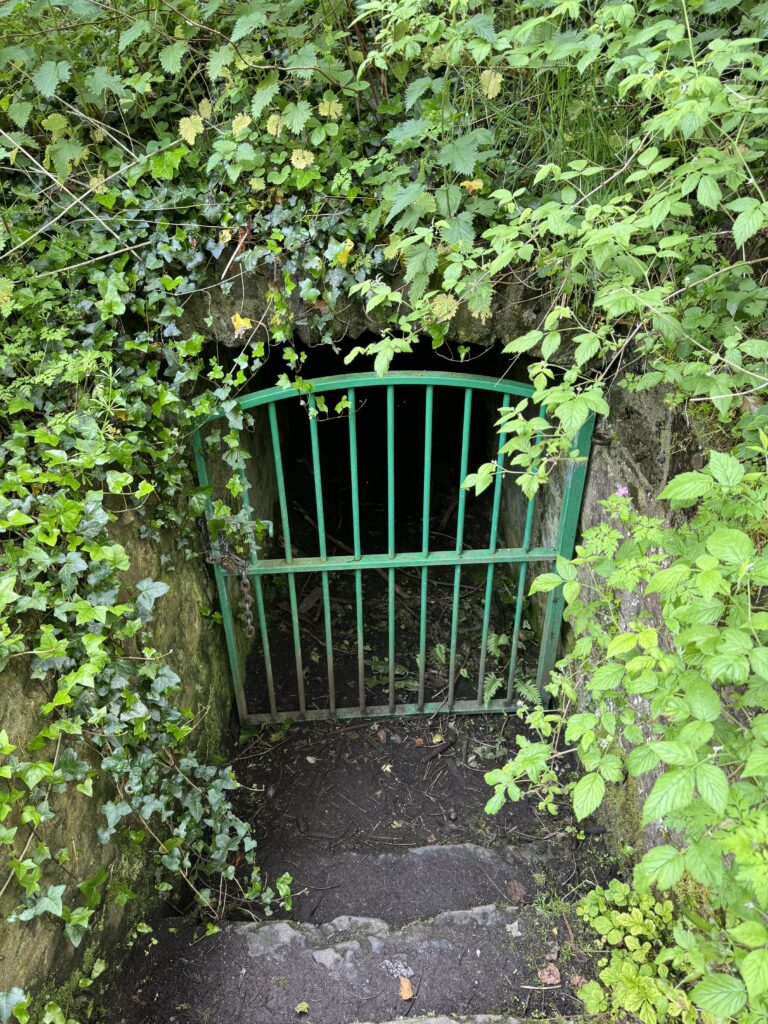
The Fairy Garden
We continued on our way and came across the next point of interest about 15 minutes later. As we approached the rear of the house, a fairy garden was a nice little surprise on the trail.
I’m sure children would like this well decorated corner of woodland. Our little one remained fast asleep though so didn’t get a chance to spark his imagination into gear.

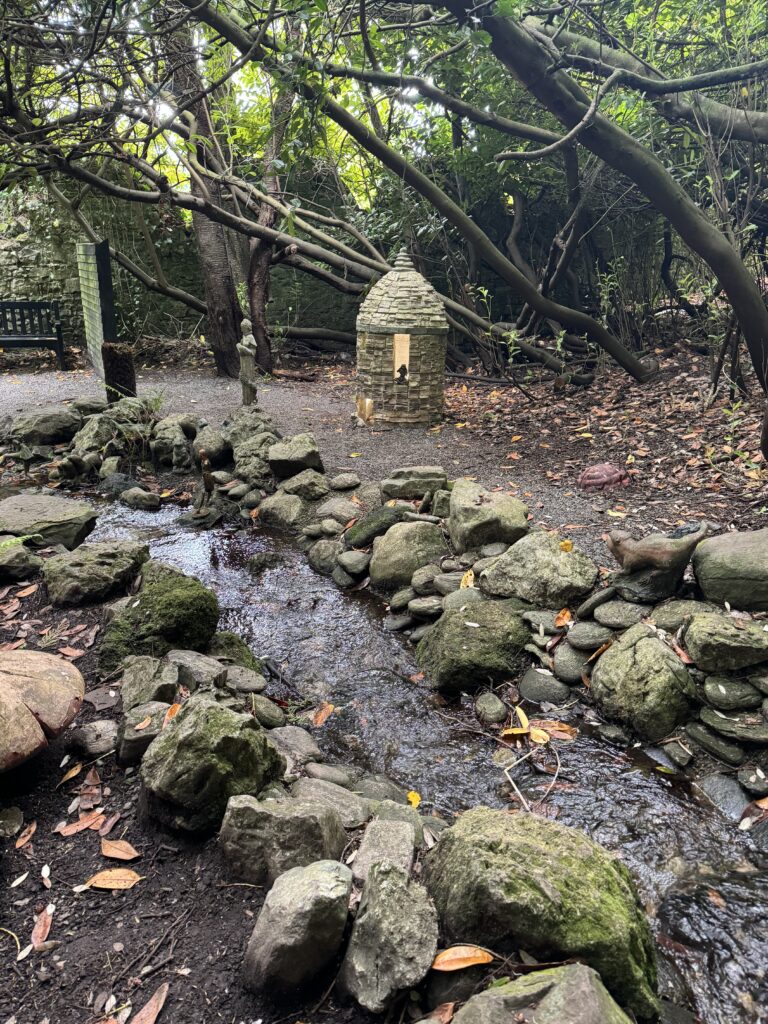
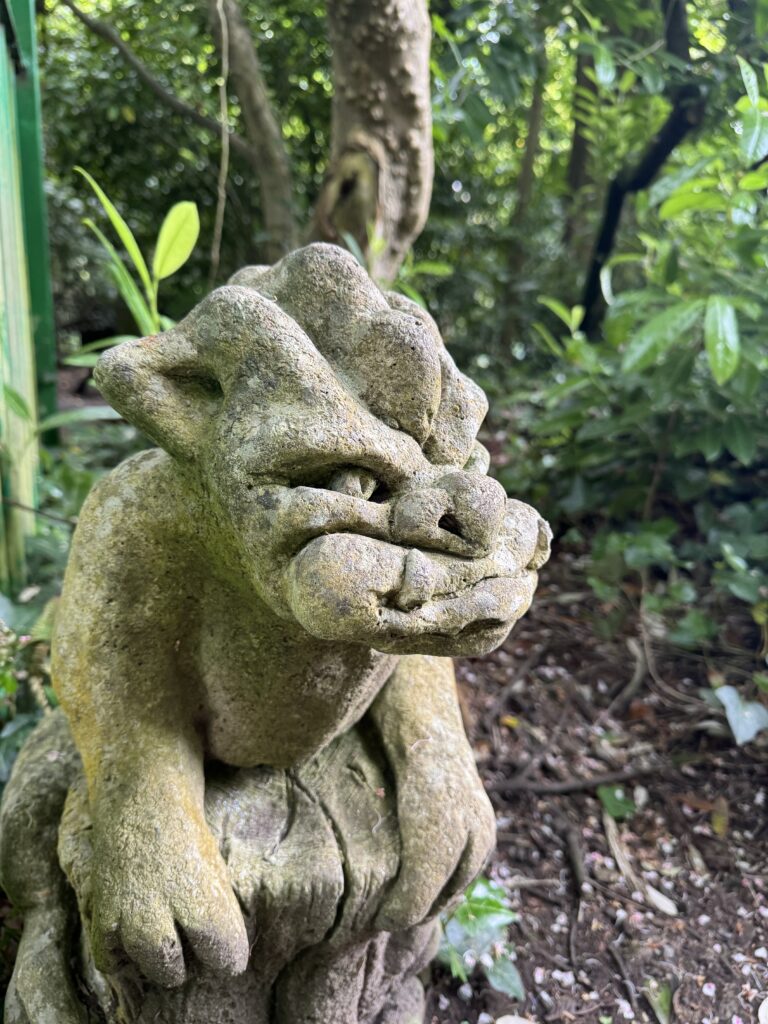
The Fairy Garden is a nice addition to the many gargoyles hiding out along the entirety of the Belvedere House Walk. Again, something the children will enjoy keeping an eye out for during the Belvedere House Walk.
Walled Garden
Beside the house itself lies the pretty walled garden of Belvedere. Seven main sections of garden (including a pond and glasshouse) are segregated by borders and pathways.
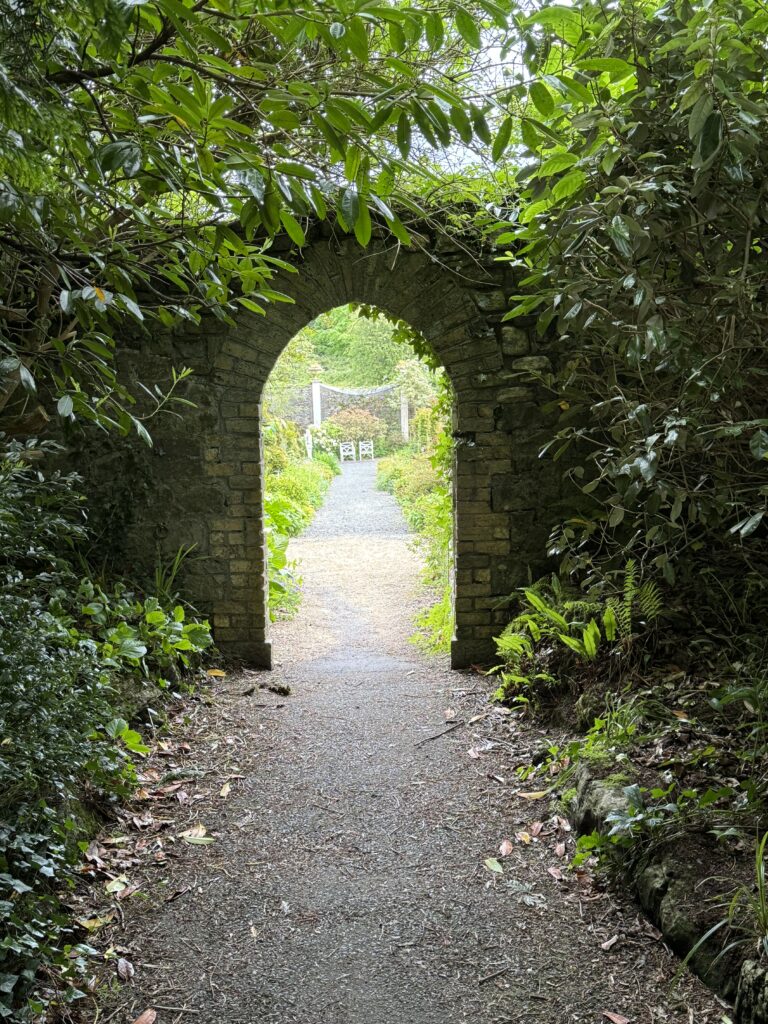
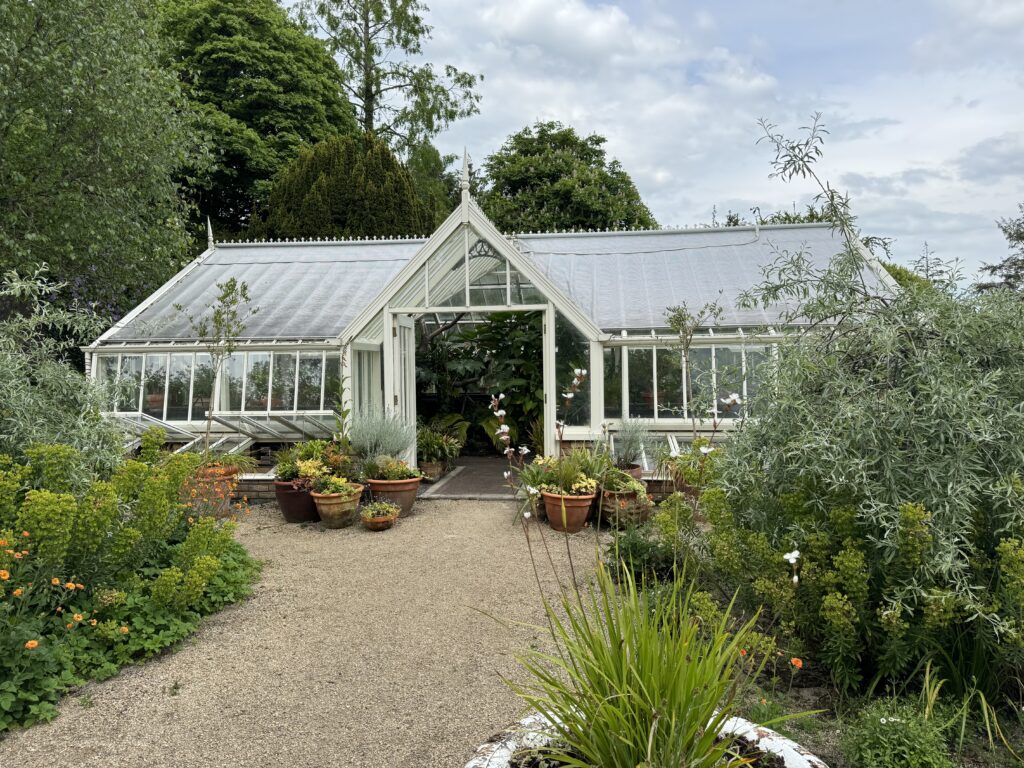

We spent a while wandering around admiring the flowers and plants. After leaving the garden we soon completed the perimeter loop. From then on, we followed our noses along the many paths that zigzagged and cut through the interior of the estate.
Octagonal Gazebo
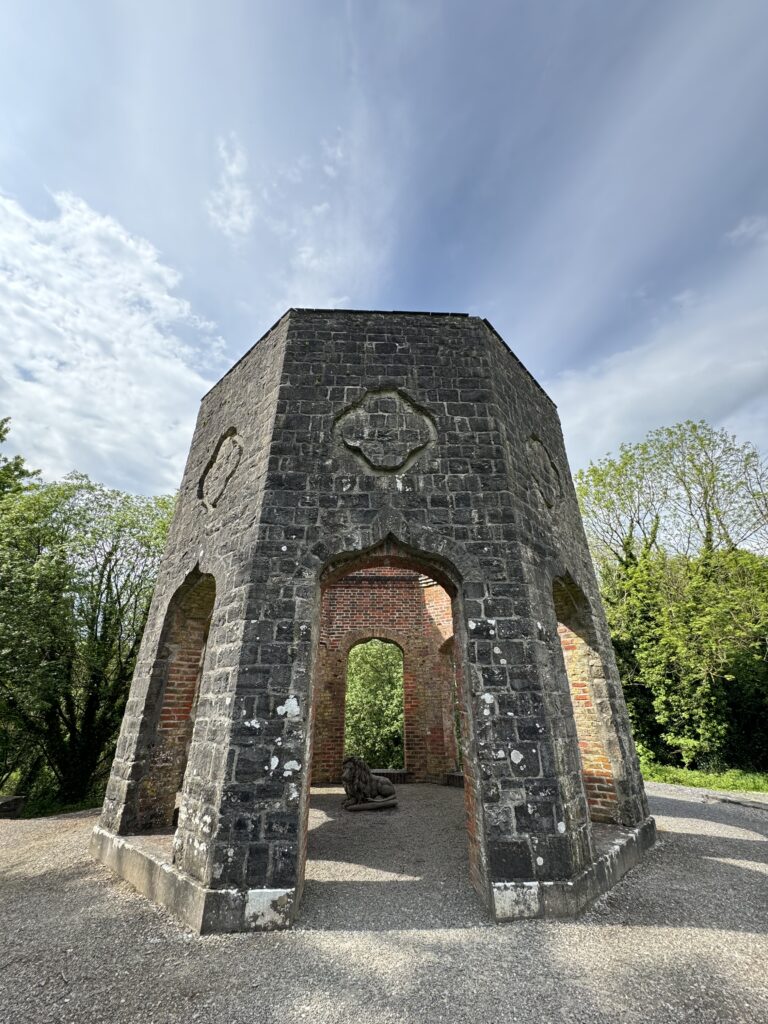
One really impressive element of our Belvedere House walk is the stone Octagonal Gazebo.
The final folly of the Belvedere House walk dates back to the 18th century. Mainly used as a picnic area and place for socialising. Previously, the Gazebo offered impressive views out on to the lake. The growth of the trees means that view is now obscured but the Gazebo remains a nice spot to sit for a while.
King Malachy’s Throne
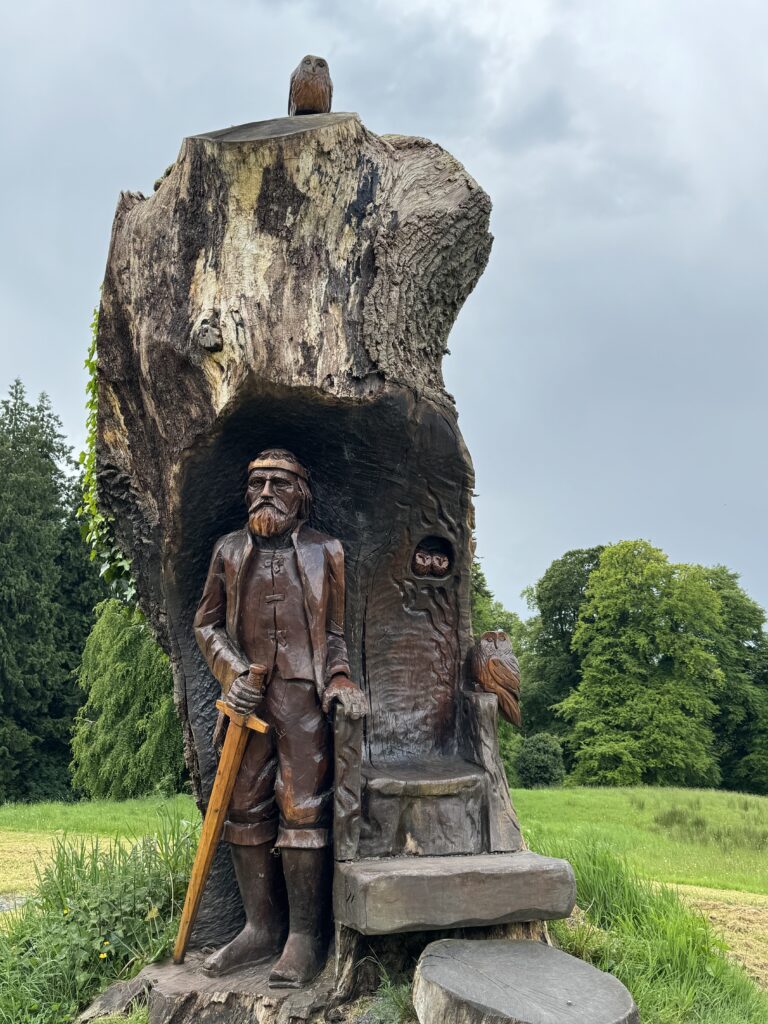
I mentioned Malachy’s Island above. Malachy succeeded Brian Boru as High King of Ireland after Brian’s death in Clontarf in 1014. Historians believe Malachy may have used the island site as a summer home. Malachy died on the island in 1022. The wooden carving known as Malachy’s Throne remembers this royal connection with the area.
Belvedere House
The final attraction on the Belvedere House walk is of course the actual house itself. Unfortunately, ongoing restoration works taking place on the house meant we could not access it during our visit.
The above article gives a whistle-stop outline of the many attractions along the Belvedere House Walk. If you are interested, you can rent audio tour equipment to accompany you on the walk. If you have no interest, you can just enjoy the pleasant scenery as you stroll. The great thing about Belvedere is that you can make it suit any preference. So do check it out the next time you visit Westmeath.